
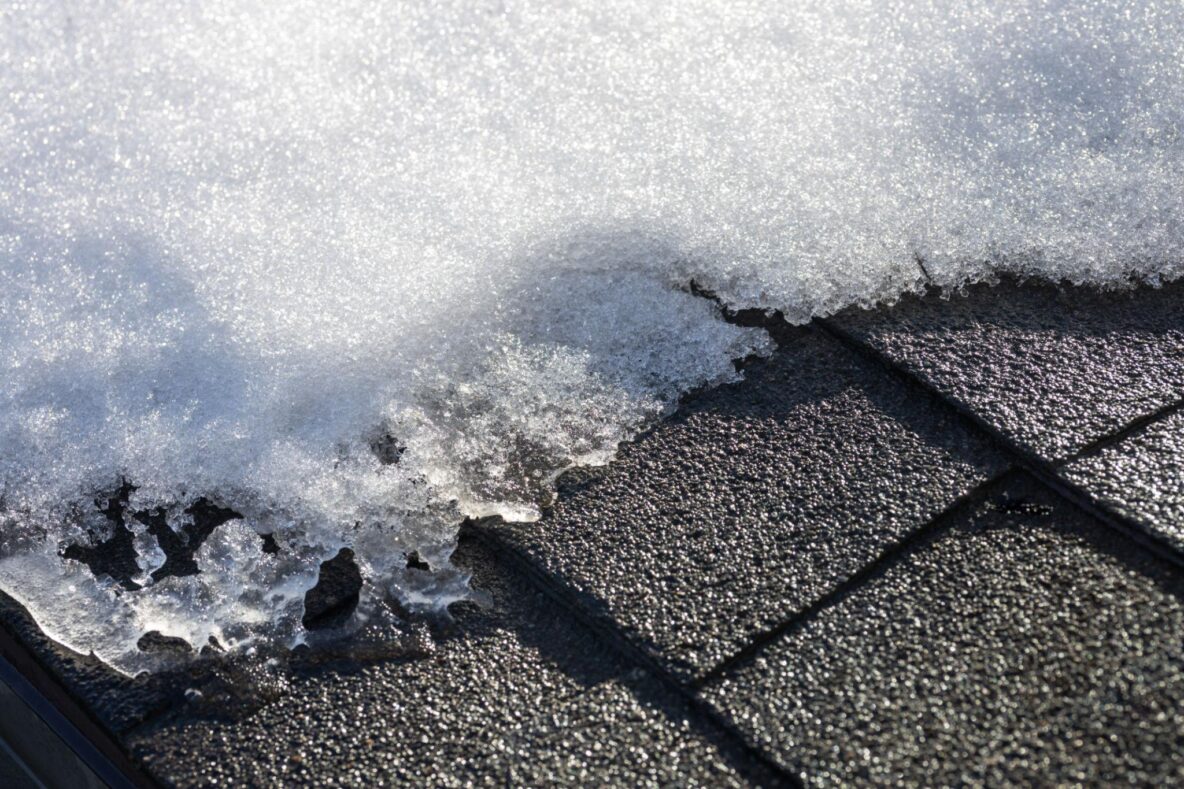
If you’ve looked up at your roof this week, you’ve probably noticed the snow finally starting to slide off. After a long stretch of freezing temperatures, February in Ohio always brings that familiar transition — cold mornings, afternoon drips, and steady melt cycles that test every roof.
For homeowners, this is one of the most important times of the year.
Snow itself isn’t usually the problem. It’s what happens during the melt that tells the real story.
Why Snow Melt Matters More Than the Snowfall
When snow begins to melt during the day and refreeze overnight, your roof goes through repeated expansion and contraction. That freeze–thaw cycle can expose weaknesses that weren’t obvious before.
Here’s what we typically see this time of year:
- Minor leaks that only appear during active melting
- Water staining on ceilings or in attic spaces
- Ice buildup along eaves (early-stage ice dams)
- Gutters pulling loose from heavy snow load
- Flashing separation around chimneys and walls
Even a roof that “looked fine” all winter can reveal issues once water starts moving.
Ice Dams: The Silent February Problem
One of the biggest risks during snow melt is ice dam formation.
When warm air from inside your home escapes into the attic, it warms the roof deck. Snow melts from underneath, runs down toward the colder eaves, and refreezes. Over time, that ridge of ice traps water behind it — and that water can push its way under shingles.
The result?
Interior leaks that appear nowhere near the roof edge.
Proper attic insulation, ventilation, and ice-and-water barrier installation make a major difference in preventing this. February is when we find out whether those systems are working the way they should.
What Homeowners Should Watch For This Week
As the snow continues melting, keep an eye on:
- Dripping sounds in attic spaces
- New ceiling stains (especially near exterior walls)
- Excessive icicles forming in one concentrated area
- Shingles that look lifted or out of alignment
- Granules collecting near downspouts
If something seems off, it usually is. Melt-related leaks often show up quickly — but they can also disappear just as fast once temperatures drop again. That doesn’t mean the problem fixed itself.
Why Small Leaks Turn Into Spring Headaches
Water intrusion in February rarely stays small.
Moisture can:
- Soak insulation and reduce its effectiveness
- Cause hidden wood rot
- Create mold conditions in attic spaces
- Weaken decking beneath shingles
By the time spring storms arrive, that minor winter issue can turn into a much larger repair.
A Smart Time for a Roof Check
Late winter is actually an ideal time for a professional inspection. Snow melt helps identify vulnerable areas before heavy spring rains begin.
A proper inspection should look at:
- Shingle integrity and seal lines
- Flashing around penetrations
- Ventilation performance
- Ice-and-water protection at eaves
- Gutter attachment and drainage flow
Addressing small concerns now is far less costly than waiting until storm season.
Final Thought
February in Ohio is unpredictable. One week we’re buried in snow — the next, it’s melting off in sheets. That transition period is when roofs are most vulnerable.
If your home is showing any signs of stress from the winter, don’t ignore them. The snow melting off your roof isn’t just a sign of warmer days ahead — it’s also your roof’s performance test.
And this is the time to pay attention.